
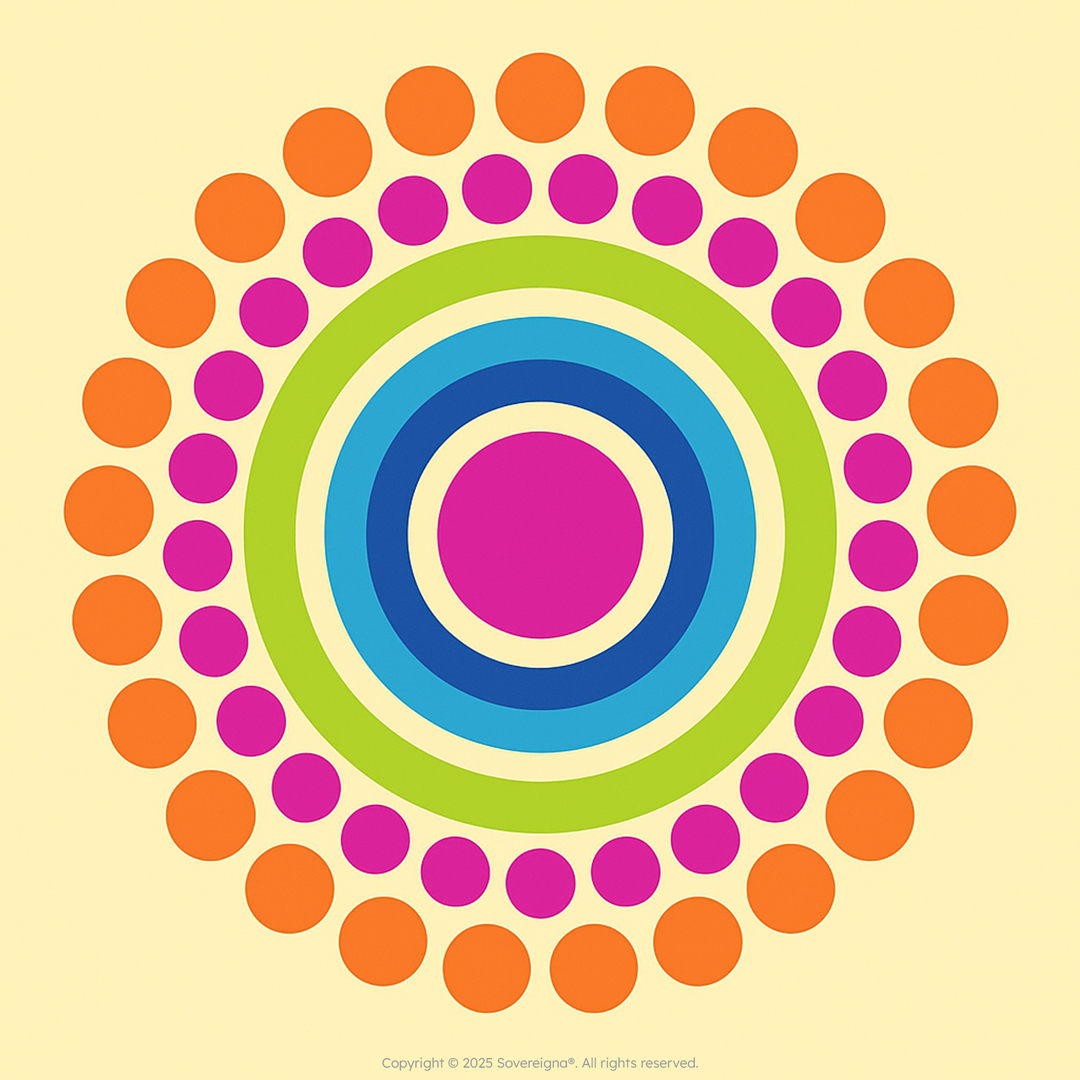
Sequential Optical Triggers (SOTs) are designed to invite stillness, not overwhelm. But like any powerful tool, they must be treated with care—especially when shared with children or individuals with heightened visual sensitivity.
This page is a resource for researchers, parents, teachers, clinicians, and caretakers who wish to explore the potential of SOTs in therapeutic or everyday settings.
Understanding Visual Sensitivity
While most people experience SOTs as calming or gently stimulating, a small percentage of viewers may be sensitive to:
- Repeating visual patterns
- Illusions of motion
- High-contrast spirals or radiating forms
This is especially important for:
- Children under 7
- Individuals with epilepsy (especially photosensitive types)
- People with migraines or neurological sensitivity
- Viewers recovering from eye strain or trauma
Safer by Design
Unlike many optical illusions, SOTs are:
- Static (non-flashing, non-animated)
- Softly blended in contrast and tone
- Visually slow (no strobe, no pulsing light)
- Inviting, not instructive (there is no “right way” to see)
That said, each person’s perception is unique, and we recommend:
- Starting with simple, calming SOTs first
- Pausing if any discomfort, strain, or disorientation arises
- Avoiding prolonged direct viewing if eyes feel tired
When Using with Children
SOTs can be:
- Anchoring for attention
- Helpful in calming overstimulation
- A gentle entry point for non-verbal emotional regulation
But children are still developing their visual processing. As a result:
- Always introduce SOTs in the presence of a caregiver
- Let the child guide their level of engagement
- Watch for signs of fatigue, eye rubbing, zoning out, or agitation
Children who respond strongly (positively or negatively) to certain visuals may benefit from additional sensory or perceptual support. In this way, SOTs may also serve as early indicators of visual or neurological sensitivity.
Design Philosophy: Less is More
As part of our commitment to accessibility and well-being, we have intentionally reduced the number of illusions per book. This allows:
- More space for rest between visuals
- Less cognitive strain for sensitive readers
- A gentler, more therapeutic pacing overall
Every image is an invitation. Not a challenge. There is no reward for finishing. Only for breathing and centering.
If you’re ever unsure about using SOTs with someone, begin with your breath. Let the image find you, not the other way around.
We believe that safety is not the absence of intensity. It’s the presence of care.
Epilepsy and Visual Triggers
Some people with epilepsy, particularly those with photosensitive epilepsy, can experience seizures when exposed to flashing lights, rapidly changing patterns, or high-contrast visuals. These visual stimuli can trigger a seizure if they fall within the individual’s sensory threshold.
However, photosensitive-friendly and child-friendly SOTs can be designed, by reducing or removing flashing, strobing, or high-frequency motion. Here’s a breakdown of the risk:
Factors That Influence the Risk:
1. Pattern and Movement
- Static vs. Dynamic: If an SOT is static (not moving) and simply consists of static patterns or gentle gradients, the risk of triggering a seizure is low. Moving or pulsating patterns are more likely to pose a risk.
- Fast Movement: SOTs that feature rapid movement or flashing transitions may increase the likelihood of a seizure. Patterns that rapidly alternate high contrast elements, or those that simulate flicker, are riskier.
- Sequential vs. Random Flow: SOTs that create a smooth, sequential flow with gradual transitions are generally safer than those with random or jarring shifts in visual stimuli.
2. Colors and Contrast
- High-contrast Patterns: Strong black-and-white contrasts or colors that create visual flickering (e.g., red flashing or high-frequency gradients) are more likely to trigger a seizure in those who are sensitive to these visual cues.
- Gradients and Soft Colors: More soothing designs, such as smooth gradients or softer color schemes (e.g., pastels), are far less likely to trigger an issue.
3. Individual Sensitivity
- Photosensitive Epilepsy: People with photosensitive epilepsy are particularly susceptible to visual triggers. For some individuals, even gentle patterns or sudden visual shifts can cause a seizure.
- Environmental Sensitivity: Some people may have heightened sensitivity to environmental factors, including stress, fatigue, or other factors that make them more prone to seizures. For others, exposure to certain lighting conditions (like flickering hospital lights or bright fluorescent lights) can increase susceptibility.
Preventing Seizure Triggers in Public Settings/Shared Spaces:
1. Use of SOTs:
- Avoid Fast Pulses: Avoid creating SOTs with rapid flashing or high-frequency motion. Make sure the visuals are smooth and slow to reduce any potential for overstimulation.
- Use Soft Colors: Opt for soothing color palettes and gentle transitions in the visuals to make the SOT more calming and less likely to stimulate seizures.
- Use Static or Gradual Flow: Prefer static designs or gentle rhythmic sequences that do not involve fast transitions or high-contrast changes.
2. Consider Placement and Context:
- In High-Risk Areas: Avoid placing highly dynamic or flashing SOTs in areas where photosensitive individuals might be exposed, such as waiting rooms, patient areas, or common spaces where individuals with epilepsy are more likely to be.
- Clear Warnings: If SOTs are used in environments like hospitals or care centers, it’s crucial to clearly label them as part of the visual therapy tools and provide warnings for sensitive individuals.
3. Collaborating with Healthcare Providers:
- Work with healthcare professionals (such as neurologists or epilepsy specialists) to evaluate the visual content used in hospitals or care centers.
- It may also be helpful to test designs in controlled environments first to observe potential reactions before large-scale implementation.
Likelihood of a Seizure Triggering:
The likelihood of someone with epilepsy walking by an SOT poster and having a seizure is low if the design is static or gentle in movement. However, if the SOT is dynamic or has flashing elements, the risk increases, especially for those with photosensitive epilepsy. Therefore:
- For calming, non-dynamic SOTs (e.g., gentle spirals, soft transitions, soothing colors), the risk of triggering a seizure is minimal.
- For more dynamic designs (e.g., pulsating or fast-moving patterns), the risk increases, especially in people with photosensitive epilepsy.
Conclusion:
The key to safety is ensuring that SOTs used in public or clinical settings (like hospitals or care centers) are designed with sensitivity in mind. Avoiding flashing, rapidly changing patterns, or harsh contrasts will help reduce any potential risk for individuals with epilepsy. In most cases, when designed responsibly, SOTs can be a safe and therapeutic tool, but caution is always required in sensitive environments.
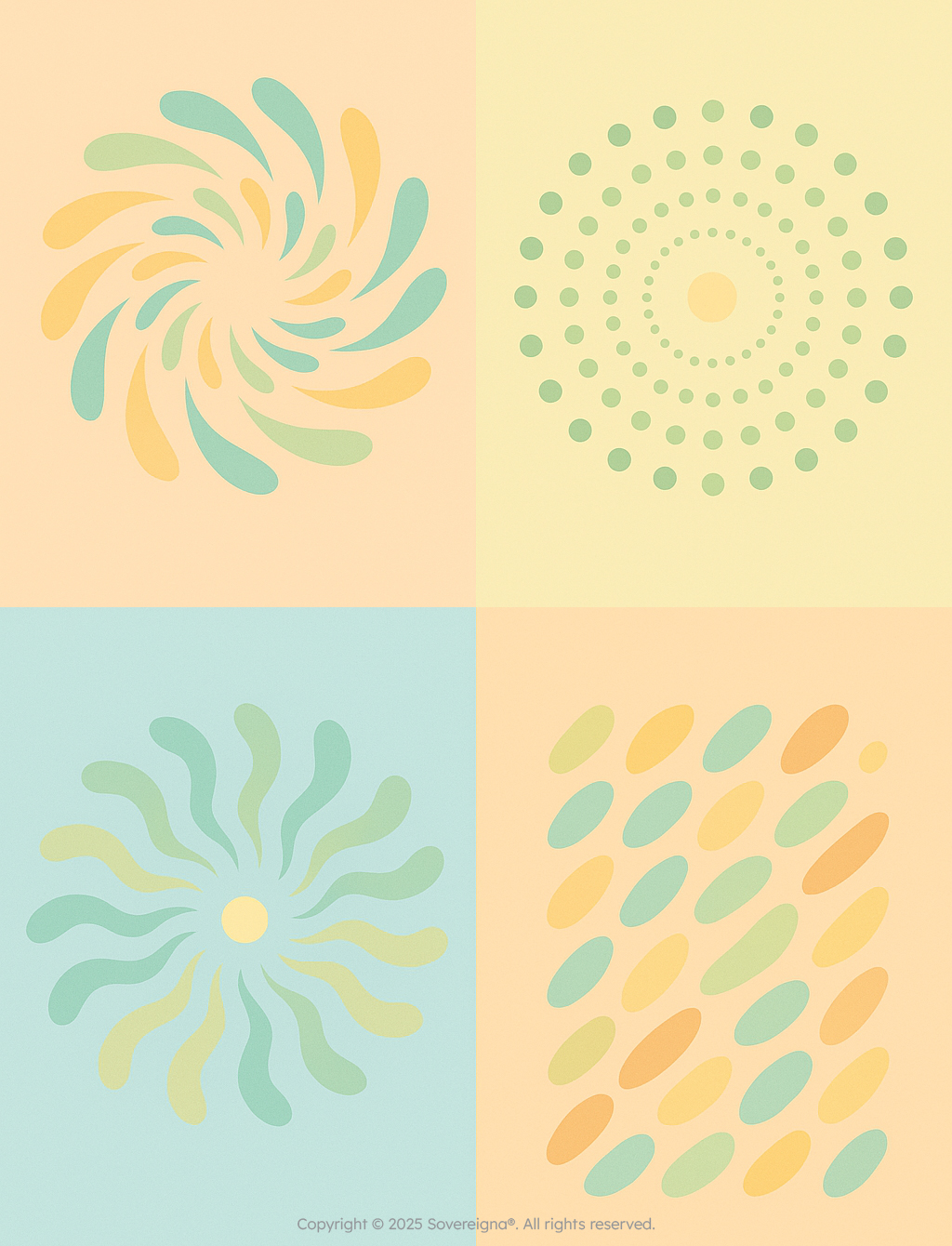
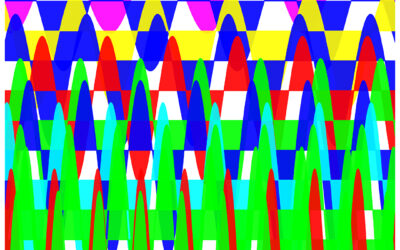
SOTs with toned-down colours (and effect) for a safer experience.

0 Comments