
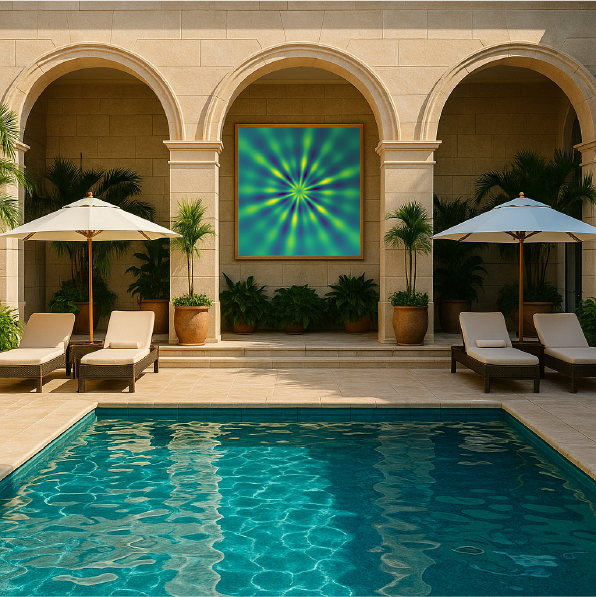
For decades, blur was an accident. A cover-up. A camera slip. A painter’s afterthought.
In the world of design, photography, and visual art, blur has always been the thing you either avoided or tried to correct. Not anymore. Now, blur is sacred.
In Sovereigna’s world, blur is no longer a flaw, but flow. It’s a feature. A function. A visual tool designed to guide the eye into stillness. And perhaps most importantly, a new form of emotional technology.
Blur: The Rejected Dimension
Traditional visual systems are built around clarity. Sharpness equals understanding. High-definition equals trust. We have been conditioned to associate focus with truth.
But the nervous system doesn’t always want truth. It wants safety. And here’s where psychology meets perception: The human eye relaxes when it stops chasing definition.
This is the principle behind gaze anchoring in neurodesign. When an image provides no edge to follow—no hard shape to decode—the eye ceases its scanning behavior. Cortical visual load drops. Micro-muscular tension reduces. Result? Calm.
Why Classic Op Art Avoided Blur
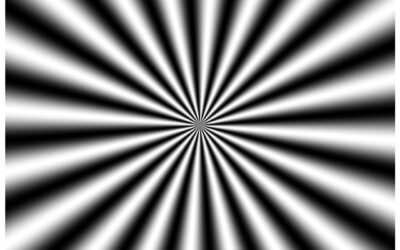
Optical art traditionally relies on contrast, precision, and geometric repetition to provoke illusions. The trick is in the sharpness—in the conflict between what the eye sees and what the brain expects. But Sovereigna flips the illusion:
We don’t want to provoke the brain. We want to release it.
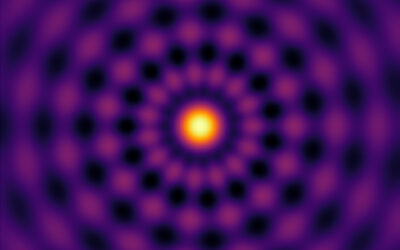
Blur disengages the analytical gaze. It slips beneath cognitive resistance. What results is not confusion, but suspension. A viewer who is not solving the image, but floating within it.
Sequential Optical Triggers (SOTs): A New Kind of Op Art
This isn’t about softness for the sake of beauty. It’s about function. We call it visual therapeutics.
Blur is used as a primary mechanic to:
- Reduce saccadic overload (rapid eye movements seeking edge/contrast)
- Activate theta state associations (linked to calm, dream, rest)
- Interrupt overactive pattern recognition reflexes (associated with anxiety)
In other words: blur is not passive. It’s intervening. And when done right, it’s sacred.
The Blur That Breaks Reality
Sovereigna’s Sequential Optical Triggers (SOTs) are not decorative illusions. They are perceptual disruptors calibrated for calm.
A being staring into one does not ask “what is it?” They simply find themselves breathing differently.
Their sense of urgency unhooks. Their surroundings mute. That moment when the room stops being a room and becomes a space. That is where sacred blur lives.
Stillness Is the New Illusion
We no longer sharpen to see. We blur to survive.
And in that soft distortion, a deeper clarity appears: You do not have to understand everything to feel safe.

Even the smallest rooms deserve a window.

0 Comments