
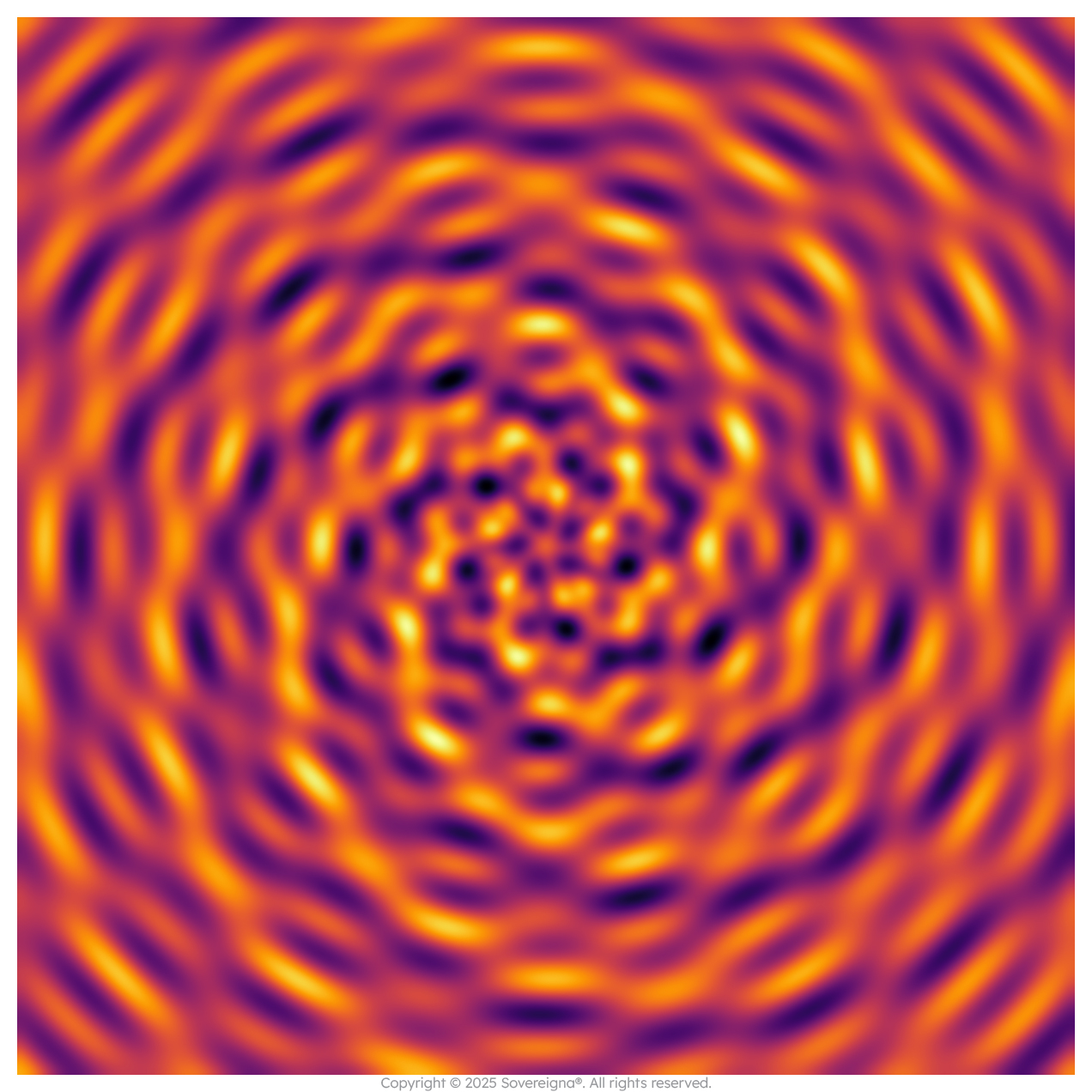
When you look at Sequential Optical Triggers (SOT), you may think you’re making a conscious choice about where to look.
You’re not. You’re being recruited. Your attention, like a spotlight with a mind of its own, locks onto a visual anchor. Often, that anchor is color. Once it has your focus, it begins building a world around that cue—highlighting anything that shares its tone, shape, contrast, or rhythm. This is called perceptual selection. And it’s not a bug, it’s how your brain filters reality.
The Invisible Gorilla
In a now-famous experiment (Chabris and Simon, 2010) , subjects were asked to count passes between basketball players. In one version, the players wore black and white jerseys. A person in a gorilla costume walked through the scene. Most viewers didn’t notice the gorilla.
But here’s the twist:
- Viewers watching the white team missed the black gorilla
- Viewers watching the black team were more likely to notice it
Why? Because attention, once anchored to a group (by color, shape, or category), begins to amplify anything visually similar. Even a gorilla.
What This Means in SOTs
When someone starts looking at a SOT, their brain subconsciously chooses an anchor. Maybe it’s:
- A soft blue dot
- A spiral shape
- A repeating diamond pattern
- A particular flow of motion
Once chosen, their mind begins collecting allies: other dots, lines, shadows, or tones that resemble it. This triggers:
- A sense of visual rhythm
- The illusion of movement
- The “a-ha” moment when the pattern breathes back
This is why SOTs often feel like they “bloom” over time. You’re not seeing more. You’re seeing deeper into what you already chose, and what your eyes choose next.
The Trick That Isn’t a Trick
Unlike classic optical illusions that aim to fool you, SOTs work by partnering with your perception.
We don’t force your focus. We invite it —and then let your own visual system do the rest.
You’re not decoding the illusion. You’re co-creating it, based on what your mind decides to love first. A color, a shape or even a blur.
Design Implications
If you’re making a SOT, ask yourself:
- What anchor do I want to whisper first? (color, shape, texture?)
- What visual groupings will feel like allies to that anchor?
- How can I reward that choice with rhythm or contrast?
You are not just making pretty spirals and random blurs. You are sculpting attention.
Color is one anchor. But so is shape. So is shadow. So is rhythm.
This is what makes SOTs accessible to more visual types:
- Colorblind viewers might anchor to geometry or spacing (or illusory colors)
- Sensitive viewers might track motion or brightness shifts
- Everyone brings their own doorway in
Breathe.

Do you see colours in this one? Don’t panic. Breathe.


0 Comments