“How’s your nervous system handling that JPG?”

Mar 31, 2025 | SOT Resources | 0 comments

While most viewers report calming, focusing, or energizing effects, certain individuals—especially those with specific neurological or psychiatric profiles—may experience unwanted or destabilizing reactions. Given that SOTs can be designed with varying parameters, we must anticipate that not all SOTs in the future are universally safe.

Based on Harati’s experiential and clinical understanding of neurotypes, both adults and children, and each one’s susceptibility to illusory visuals (even though it’s a static JPEG image) and potential risk, we have compiled a non-exhaustive mitigatory design guide for future creators to create SOTs mindfully. We will append/edit this as we progress.

Saba Harati is a clinical psychologist with a Master of Clinical Psychology (UOC) and MEd (Guidance and Counselling)(USM) and five years of clinical psych assessments and therapy administration with diverse clientele.

Neurotype / Condition

Potential Risk

Notes & Suggested Mitigation (For designers/administrators)

Schizophrenia / Schizoaffective

May amplify delusional ideation, reference hallucinations, or pattern paranoia

Avoid layered illusions with faces, motion, or perceived codes; always introduce in safe, grounded, therapist-supported settings

OCD (Obsessive-Compulsive Disorder)

Repetitive visuals may trigger counting, checking, or scanning compulsions

Use minimal, asymmetrical, or softly-structured SOTs; offer context that there is no “solution”

Delusional Disorders

SOTs may be interpreted as containing hidden messages or surveillance cues

Avoid illusions with strong symmetry, “portal” metaphors, or exclusive/in-group framing

Epilepsy (Photosensitive)

Rapid flickering or high-contrast motion patterns may trigger seizures

Do not use flashing SOTs; test any new illusion in controlled environments with prior screening

Autism (ASD)

May overwhelm sensory integration or provoke intense focus/fixation

Use slow, gentle transitions and regulate exposure time; allow user to self-pace

PTSD / Trauma

Certain visuals may unexpectedly activate fear memories or dissociation

Introduce in trauma-informed environments with clear grounding text and support options

You feel too much because you are too much, in the way that rare things are too much.

Update soon, friends. Remember… breathe with a smile. Just because you can.


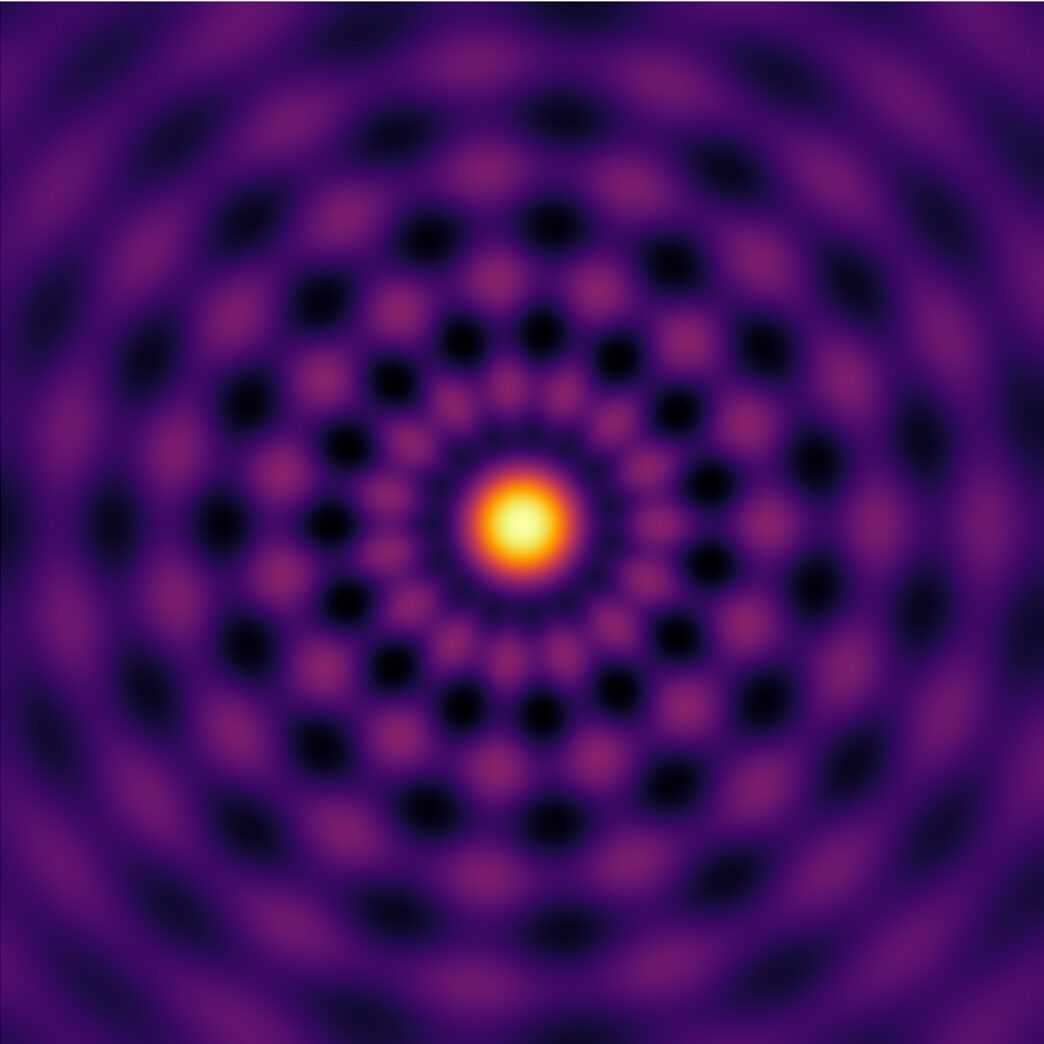
    A simple, anchoring SOT that intends not to overstimulate.

    0 Comments

    Submit a Comment

    Sequential Optical Triggers (SOTs): A New Framework for Perceptual Flow in Visual Therapeutics

    Sequential Optical Triggers (SOTs): A New Framework for Perceptual Flow in Visual Therapeutics

    Sequential Optical Triggers (SOTs) represent a novel approach to visual design focused on creating directed perceptual flow rather than isolated illusions. Rooted in a fusion of optical illusion theory, rhythm design, and psychological regulation, SOTs function as modular perceptual stimuli. This paper introduces the foundational theory of SOTs, contrasting them with traditional optical illusions, and proposes their therapeutic potential in sensory regulation, especially for neurodivergent individuals experiencing overstimulation, anxiety, or hyperactivity cycles.

    Sacré Blur: Unlocking the Blur Dimension

    Sacré Blur: Unlocking the Blur Dimension

    For decades, blur was an accident. A cover-up. A camera slip. A painter’s afterthought.

    In the world of design, photography, and visual art, blur has always been the thing you either avoided or tried to correct. Not anymore. Now, blur is sacred.

    Less Is More: Designing SOTs for Restorative Engagement

    Less Is More: Designing SOTs for Restorative Engagement

    As the creators of Sequential Optical Triggers (SOTs), we’ve chosen to embrace a principle that often gets overlooked in the design of visual experiences:
    Vision is not infinite. It is energetic. And it can be exhausted.
    After several months of intense development, experimentation and personal testing, we discovered a truth not from theory, but from the body: Too many illusions—no matter how beautiful—begin to overwhelm. They invite too much. They trigger the system instead of soothing it.

    Internal Debate: SOT Ethics and the Slippery Slope

    Internal Debate: SOT Ethics and the Slippery Slope

    Visual art, including SOTs and other forms of visual therapeutics, can have a profound psychological influence. This can be a positive force—helping people calm down, focus, or even stimulate mental clarity. But there’s always the question: How much power should we wield over people’s emotions and mental states?