Can breathing truly be a life-sustaining process in the context of SOTs?

Mar 29, 2025 | SOT Resources | 0 comments

Yes, and more than that. You must breathe consistently to experience SOTs. Here’s why…

How Breathing Interacts with Perception:

  1. Breathing Helps Guide Visual Flow:


    • Subtle eye movements occur naturally during breathing. These micromovements allow our eyes to track visual patterns.


    • In sequential optical triggers (SOTs), the eye needs to move just enough for the brain to interpret flow and rhythm, making the SOT effective.


    • If you hold your breath, those subtle eye movements stop, which can decrease the impact of the visual flow because the body is holding still, limiting the rhythm and motion needed for the illusion to work.


  2. SOTs as Mental “Breathing”:


    • In a psychological sense, SOTs are almost like a metaphorical breath for the mind. They provide a rhythm for the mind to follow, just as breathing provides a rhythm for the body.


    • When mind and body sync, through breathing or through the guiding visual rhythm, there’s a calming effect. This sync may not be literal “life-sustaining” in the traditional sense, but it’s life-sustaining in terms of mental balance and calm.


Can Breathing Influence Visual Perception?

Yes. In neuroscience, we know that breathing and visual perception are closely linked, particularly when it comes to:

  • Cognitive regulation (calming down after stress)


  • Focus (maintaining attention)


  • Visual entrainment (when visual patterns align with rhythmic cycles like breathing, which can enhance focus and calm)


Research also shows that eye movements and breathing share a rhythm, both of which impact our ability to process information. So, in a very real sense, breathing supports visual perception.

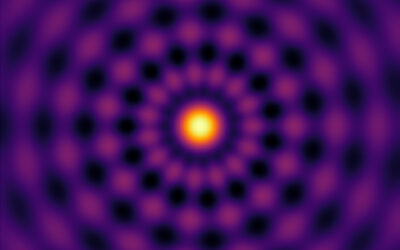
This SOT doesn’t look like much to the eager eye, but with deep breathing and a sustained relaxed gaze, a sequence of enchanting visual shifts unfolds. Try it! Remember to breathe.

0 Comments

Submit a Comment

Sequential Optical Triggers (SOTs): A New Framework for Perceptual Flow in Visual Therapeutics

Sequential Optical Triggers (SOTs): A New Framework for Perceptual Flow in Visual Therapeutics

Sequential Optical Triggers (SOTs) represent a novel approach to visual design focused on creating directed perceptual flow rather than isolated illusions. Rooted in a fusion of optical illusion theory, rhythm design, and psychological regulation, SOTs function as modular perceptual stimuli. This paper introduces the foundational theory of SOTs, contrasting them with traditional optical illusions, and proposes their therapeutic potential in sensory regulation, especially for neurodivergent individuals experiencing overstimulation, anxiety, or hyperactivity cycles.

Sacré Blur: Unlocking the Blur Dimension

Sacré Blur: Unlocking the Blur Dimension

For decades, blur was an accident. A cover-up. A camera slip. A painter’s afterthought.

In the world of design, photography, and visual art, blur has always been the thing you either avoided or tried to correct. Not anymore. Now, blur is sacred.

“How’s your nervous system handling that JPG?”

“How’s your nervous system handling that JPG?”

While most viewers report calming, focusing, or energizing effects, certain individuals—especially those with specific neurological or psychiatric profiles—may experience unwanted or destabilizing reactions. Given that SOTs can be designed with varying parameters, we must anticipate that not all SOTs in the future are universally safe.

Less Is More: Designing SOTs for Restorative Engagement

Less Is More: Designing SOTs for Restorative Engagement

As the creators of Sequential Optical Triggers (SOTs), we’ve chosen to embrace a principle that often gets overlooked in the design of visual experiences:
Vision is not infinite. It is energetic. And it can be exhausted.
After several months of intense development, experimentation and personal testing, we discovered a truth not from theory, but from the body: Too many illusions—no matter how beautiful—begin to overwhelm. They invite too much. They trigger the system instead of soothing it.