Breathe To Win: The SOT Antipuzzle

Mar 29, 2025 | SOT Resources | 0 comments

There are puzzles, and then there are SOTs.

A puzzle demands logic. Strategy. Solution. It says: “Figure me out.” A SOT does the opposite. It says: “Be still enough to see me.”

Sequential Optical Triggers (SOTs) aren’t visual tricks or games to be conquered. They’re antipuzzles—designs that don’t reward problem-solving, but perceptual surrender.

They aren’t solved by effort. They reveal themselves through stillness.

The Game Without Shame

Traditional games are built on loops of tension and release. Win or lose. Right or wrong. The brain tightens. The stakes climb. And for many, this loop is exhausting.

SOTs offer a new kind of loop: breathe->gaze->soften->see->breathe. There’s no timer (although some ‘challenging’ SOTs require up to 3 minutes for full sequence). No failure state. Just a gentle invitation,“Can you see it yet?”

And when you do, even for a second, the illusion rewards you—a spiral breathes, a grid pulses, a center dilates like an eye welcoming light.

That moment feels like a win because it is. Because it means you’re back. In your body, in your breath… In now.


How the Antipuzzle Works

SOTs are visual machines tuned for nervous system regulation. But they wear the mask of games.

They challenge your eyes to focus. They dare your mind to slow. They reward perception, not performance.

This is the opposite of the gamified world we live in. In a culture of metrics, alerts, achievements and dopamine loops, SOTs say:

“What if the reward is stillness?”

That’s the antipuzzle. A challenge that solves you.


A New Therapeutic Loop

We believe SOTs can reshape how we deliver therapy or momentarily anchor, especially for neurodivergent minds. Instead of saying:

“Sit still.”

“Take a breath.”

“Calm down.”

We hand them a page and say, “Want to try seeing this?”

That one question bypasses resistance. It turns regulation into curiosity. Into a win-state.

And best of all, there’s no shame in failure. Because there’s no failure. Just another chance to see.
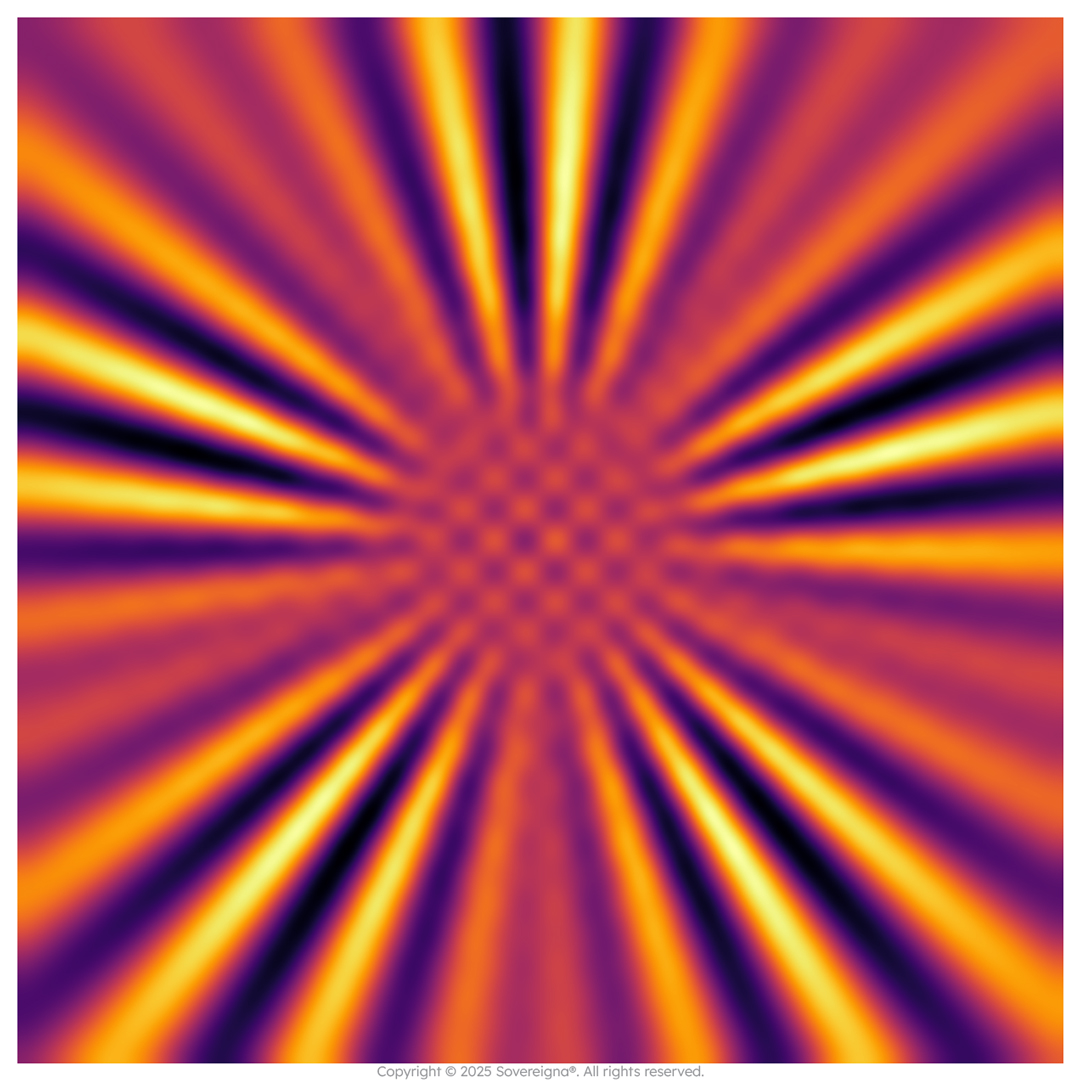


If you’re wondering why this SOT calms you while the other felt electric, you’re already in the loop. You’re already playing, or rather— not playing. And if you feel better—more grounded, more curious, more present— you’ve already won.

Welcome to the antipuzzle.

0 Comments

Submit a Comment

Sequential Optical Triggers (SOTs): A New Framework for Perceptual Flow in Visual Therapeutics

Sequential Optical Triggers (SOTs): A New Framework for Perceptual Flow in Visual Therapeutics

Sequential Optical Triggers (SOTs) represent a novel approach to visual design focused on creating directed perceptual flow rather than isolated illusions. Rooted in a fusion of optical illusion theory, rhythm design, and psychological regulation, SOTs function as modular perceptual stimuli. This paper introduces the foundational theory of SOTs, contrasting them with traditional optical illusions, and proposes their therapeutic potential in sensory regulation, especially for neurodivergent individuals experiencing overstimulation, anxiety, or hyperactivity cycles.

Sacré Blur: Unlocking the Blur Dimension

Sacré Blur: Unlocking the Blur Dimension

For decades, blur was an accident. A cover-up. A camera slip. A painter’s afterthought.

In the world of design, photography, and visual art, blur has always been the thing you either avoided or tried to correct. Not anymore. Now, blur is sacred.

“How’s your nervous system handling that JPG?”

“How’s your nervous system handling that JPG?”

While most viewers report calming, focusing, or energizing effects, certain individuals—especially those with specific neurological or psychiatric profiles—may experience unwanted or destabilizing reactions. Given that SOTs can be designed with varying parameters, we must anticipate that not all SOTs in the future are universally safe.

Less Is More: Designing SOTs for Restorative Engagement

Less Is More: Designing SOTs for Restorative Engagement

As the creators of Sequential Optical Triggers (SOTs), we’ve chosen to embrace a principle that often gets overlooked in the design of visual experiences:
Vision is not infinite. It is energetic. And it can be exhausted.
After several months of intense development, experimentation and personal testing, we discovered a truth not from theory, but from the body: Too many illusions—no matter how beautiful—begin to overwhelm. They invite too much. They trigger the system instead of soothing it.